
Newly-elected leaders urged to tackle NCD crisis
May 30, 2025
Health advocates push for independent health promotion body to combat NCDs
August 19, 2025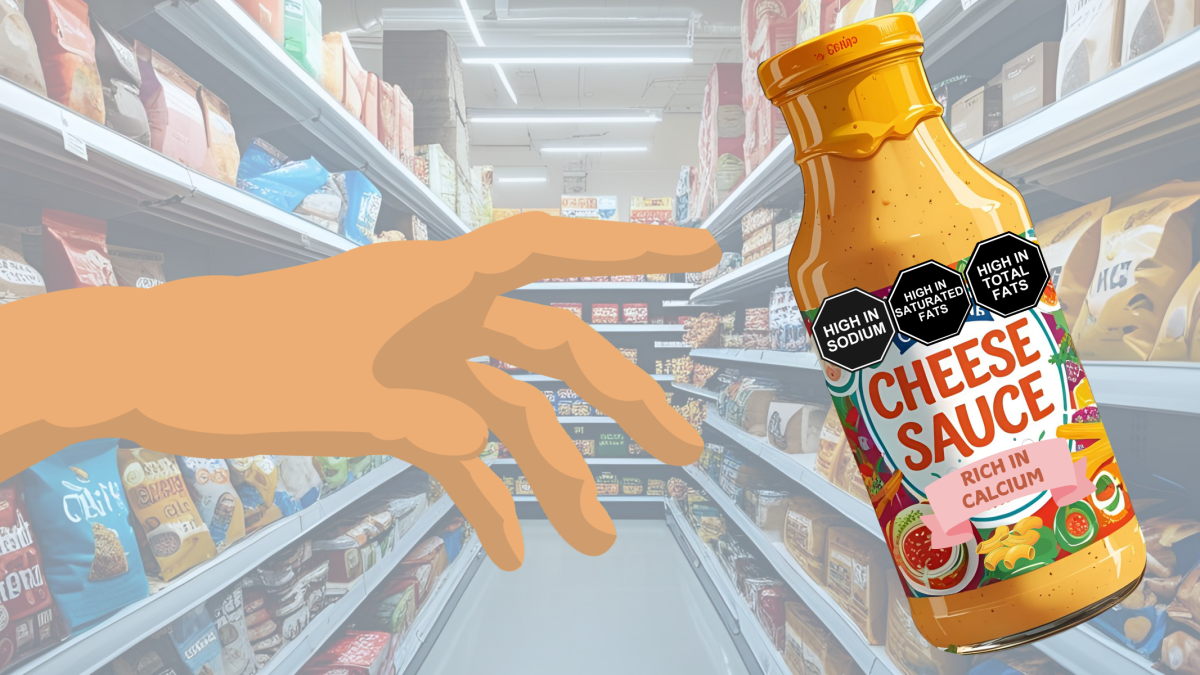
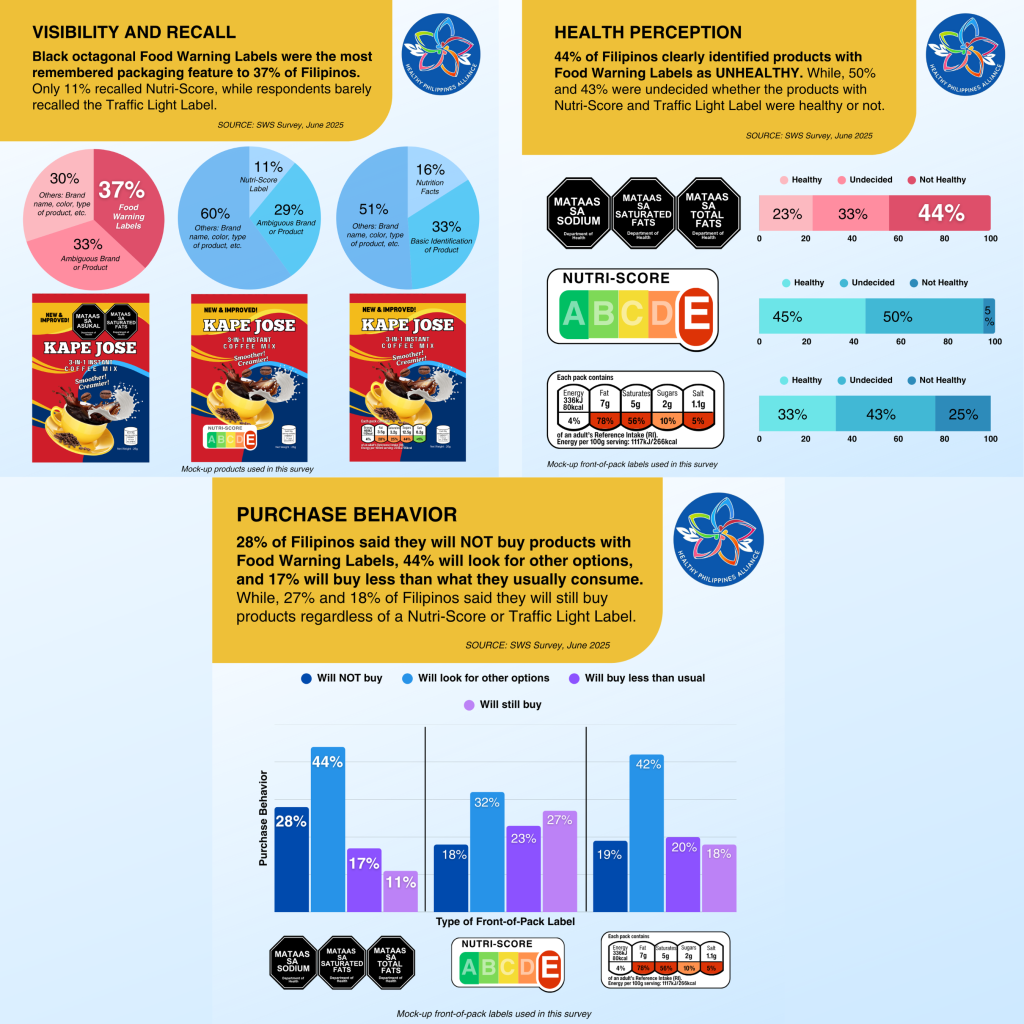
Convened by HealthJustice Philippines, the Healthy Philippines Alliance, a network of public health advocates committed to prevent noncommunicable diseases (NCDs), found that the black octagonal Food Warning Labels were the most effective front-of-pack labeling scheme to address Filipinos’ unhealthy consumption of ultra-processed food. They delivered the best results compared to Nutri-Score and Traffic Light Label in terms of consumer recall, health perception, and purchase behavior especially among the youth in the 18 to 34 age group.
The findings were based on the latest Social Weather Stations (SWS) survey commissioned by the HPA in June. It revealed that highly visible labels could lead to better utilization after 37% of respondents who examined a mock-up product with Food Warning Labels said the black octagons were the most striking and easily remembered packaging feature.
In addition, of respondents who saw mock-up Food Warning Labels indicating high in sodium, saturated fats, and total fats, 44% certainly identified the product as unhealthy. Meanwhile, 28% decided they will not buy the product, 44% will look for other options, and 17% will buy less than what they usually consume, with the top reason being the health risk it poses.
“The message is clear: warning labels on food products are effective,” said Alyannah Lagasca, Lead Convener of the HPA Youth Network. “When packaging clearly identifies items high in sugar, sodium, and unhealthy fats, it helps guide Filipino consumers, including children and youth, toward healthier purchasing decisions. International experience reinforces this approach; in Chile, both women and adolescents found that simple black-and-white octagonal warning labels were the most visible, easy to understand, and impactful in influencing their choices. It’s not about guesswork—it’s about clarity.”
In celebration of International Youth Day, Lagasca emphasized the importance of creating supportive systems for young people: “Building an environment that enables the youth to lead healthier lives must be a national priority. Instead of overwhelming them with complex information, we must simplify nutrition messaging so that children and adolescents can easily adopt nutritious eating habits. This is a vital step in preventing premature deaths caused by diet-related noncommunicable diseases such as heart disease, diabetes, cancer, and obesity.”
“Ultimately, our goal is to empower consumers to make informed decisions—to pause, reflect, and choose wisely. We envision a future where young Filipinos are equipped to make smart, health-conscious choices with confidence and ease.”
The SWS survey reported only 11% said they remember seeing the Nutri-Score Label, while respondents barely remembered the Traffic Light Label from the mock-up product.
Moreover, most Filipinos who were shown mock-up Nutri-Score and Traffic Light Labels were left confused with 50% and 43% respectively saying they were undecided whether the product was healthy or not, and 27% and 18% said they will still buy the product.
Dr. Jaime Galvez Tan, former Health Secretary and Lead Convener of the HPA, expressed that, “Other countries in Latin America, are a testament to the effectiveness of Food Warning Labels as the best global practice. Chile was the first to implement it as a policy and they started about 10 years ago as an intervention to obesity among the youth. Their government leaders listened to adolescents’ responses in a focused group discussion study who said warning labels work the best. Now is our turn to test Food Warning Labels that have great potential to empower Filipino consumers and prevent the rising incidents of diet-related NCDs slowly killing them.”
In Chile, a 2021 study showed that Food Warning Labels reduced consumers’ purchase of products tagged as “High In” sugar (by 26.7%) sodium (by 36.7%) and saturated fats (by 15.7%).
END